
Materials
100% Cotton vs. Cotton Blends (CVC, TC)
A "cotton" label can mean 100% cotton or a cotton-polyester blend at various ratios — the two feel, hold their shape and take print color very differently, even though they can look similar at a glance. Here’s how to tell them apart and choose the right one for a uniform order.
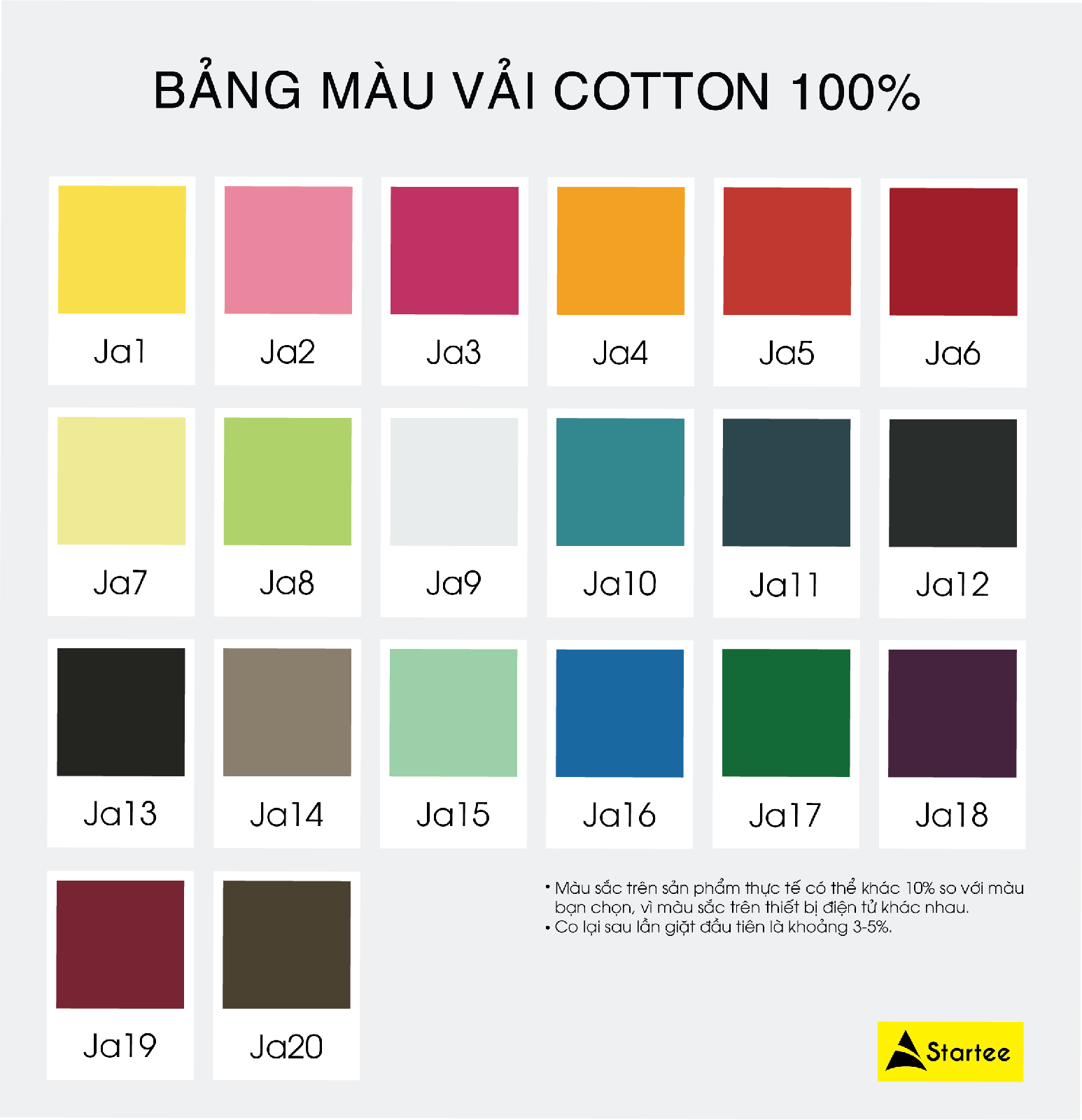
What 100% cotton is
100% cotton is woven entirely from natural cotton fiber — it absorbs sweat well, feels cool and soft, and is gentle on sensitive skin, including children’s wear. It’s also the fabric that prints most accurately with DTG, since ink sets evenly into cotton fibers. The trade-off: it wrinkles more easily than blended fabric, and shrinks about 3–5% after the first wash — a natural property, not a defect.
What CVC and TC blends are
- CVC (Chief Value Cotton) — a higher cotton ratio than polyester (often around 60/40 or 65/35 favoring cotton), keeping most of cotton’s coolness and softness while holding its shape and wrinkling less.
- TC (Tetron Cotton) — a higher polyester ratio than cotton (roughly the reverse of CVC), the most shape-stable and wrinkle-resistant, usually the best price, but less absorbent and warmer to wear than 100% cotton.
Quick comparison
| Trait | 100% Cotton | CVC | TC |
|---|---|---|---|
| Coolness, absorbency | Best | Fairly good | Lower |
| Shape retention, low wrinkle | Lowest | Good | Best |
| DTG print accuracy | Most accurate | Good | Lower (consider DTF/heat transfer if polyester-heavy) |
| Shrinkage after first wash | Highest (3–5%) | Moderate | Lowest |
| Cost | Higher | Moderate | Usually best |
Which one to choose for uniforms
- Garments worn close to skin, children’s wear, or designs needing DTG-printed photos/gradients: choose 100% cotton.
- Bulk corporate uniforms balancing feel and budget: CVC is the most common choice.
- Frequently worn, frequently washed uniforms on a tight budget that need to hold shape: TC fits better.
Not sure which to pick? See custom uniform manufacturing for advice matched to your budget and use case.