
Sublimation Printing (In Chuyển Nhiệt)
Sublimation printing — called “in chuyển nhiệt” in Vietnam — prints the design with sublimation ink onto transfer paper, then presses it at high heat: the ink turns into a gas and bonds into the polyester fibers, without forming a film on top of the fabric. The print stays as light as the fabric itself, doesn’t peel or crack, and can cover the entire garment.
Printing onto a film and pressing that onto the shirt (a layer on top of the fabric) is DTF printing; cutting colored vinyl sheets and pressing them on is heat-transfer vinyl.
3D sports jerseys and tank tops: printed on the fabric, then sewn
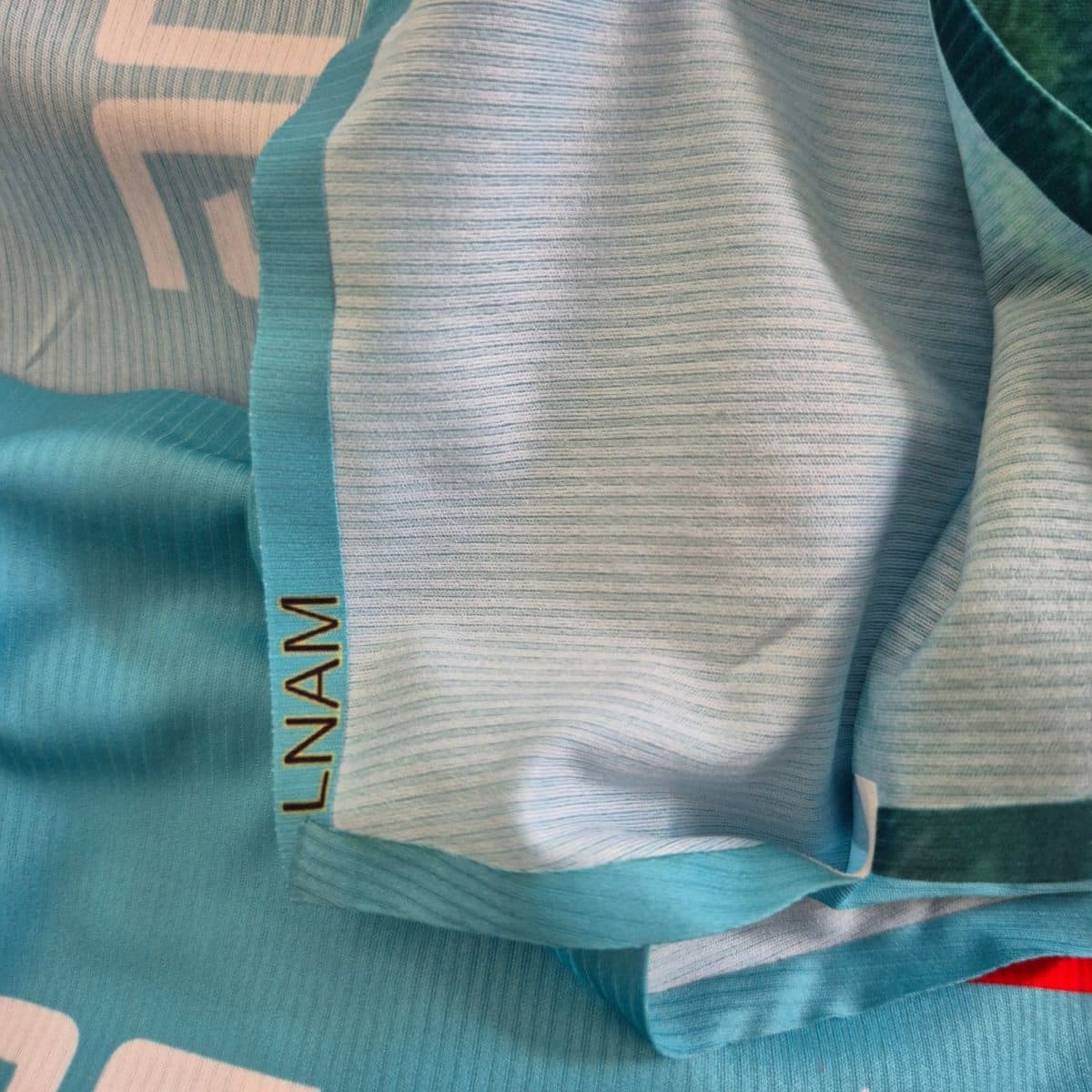
All-over printed sports jerseys and tank tops (3D shirts) are sublimation-printed directly onto sports polyester fabric (bird’s-eye knit, mesh or a similar fabric on request), and only then is the fabric cut and sewn into the shirt. Because it’s printed before sewing, the design covers the body and sleeves right up to the seams, while the fabric stays breathable and quick-drying.
- All-over printing with no limit on area or colors: numbers, names, sponsor logos, patterns running from the body onto the sleeves.
- Seamless finishing is available: the edges are heat-bonded with adhesive combined with stitching instead of regular seams, so the shirt is lighter and doesn’t rub against the body during exercise.
- Order online from 10 pieces on Startee Mockup, sizes S–3XL.
Why choose sublimation
- Vivid color, sharp photos and gradients, no limit on the number of colors.
- The ink sits inside the fibers, so it doesn’t peel, crack, or stiffen the fabric like a pressed film.
- All-over printing, including edge-to-edge patterns other methods struggle with.
Limitations to know
- Polyester only (sportswear, cool-touch knits); it doesn’t bond to cotton. Cotton shirts should use DTG or DTF.
- Needs a white or light fabric: sublimation ink is transparent and has no white, so it can’t print on dark garments.
- Pressed onto a finished polyester shirt, folds, armpits and seams can leave unprinted gaps; for full coverage, print the fabric first and sew afterwards, as with 3D shirts.