
Unlimited-Color Cotton Printing with DTG (Brother GTX)
A multi-color design, a photograph, or a smooth color gradient often gets turned down or quoted a steep price at shops that only screen print — because every added color means another screen to make. DTG printing on cotton solves exactly this: no limit on the number of colors in a design, no screen required, and Startee’s DTG orders are printed on a Brother GTX with Innobella ink certified safe for skin.
Why DTG has no color limit
DTG (Direct to Garment) jets ink directly onto fabric pixel by pixel, much like an inkjet printer on paper — there’s no screen involved, so there’s no "one screen per color" the way screen printing works. The printer reads the design file and jets the right color at the right spot, so a 3-color design or a 300-color one (like a photograph) print through the exact same process, with no extra screen-setup cost.
Why cotton is the ideal fabric for DTG
DTG ink is water-based and needs a fiber that absorbs it well to print accurate, durable color — 100% cotton or a high-cotton blend fits this exactly. 100% polyester, by contrast, absorbs ink poorly and often prints faded or inaccurate color with DTG — which is why Startee always advises on the right fabric before settling on a printing technology; see roll fabric for more.
DTG or DTF for cotton?
DTF also prints unlimited colors and works on more fabric types than DTG, including dark fabric with no separate white base layer needed. But once the fabric is confirmed as cotton or a high-cotton blend, DTG remains the better choice: the ink sets directly into the fabric fibers, so the print feels soft and barely noticeable on the surface — whereas DTF applies a thin film layer on top of the fabric, which feels slightly thicker to the touch. In short: if you know it’s printing on cotton, choose DTG; if you need to print on several fabric types or shirt colors in the same batch, DTF is more flexible.
The Brother GTX + Innobella ink behind Startee’s DTG orders
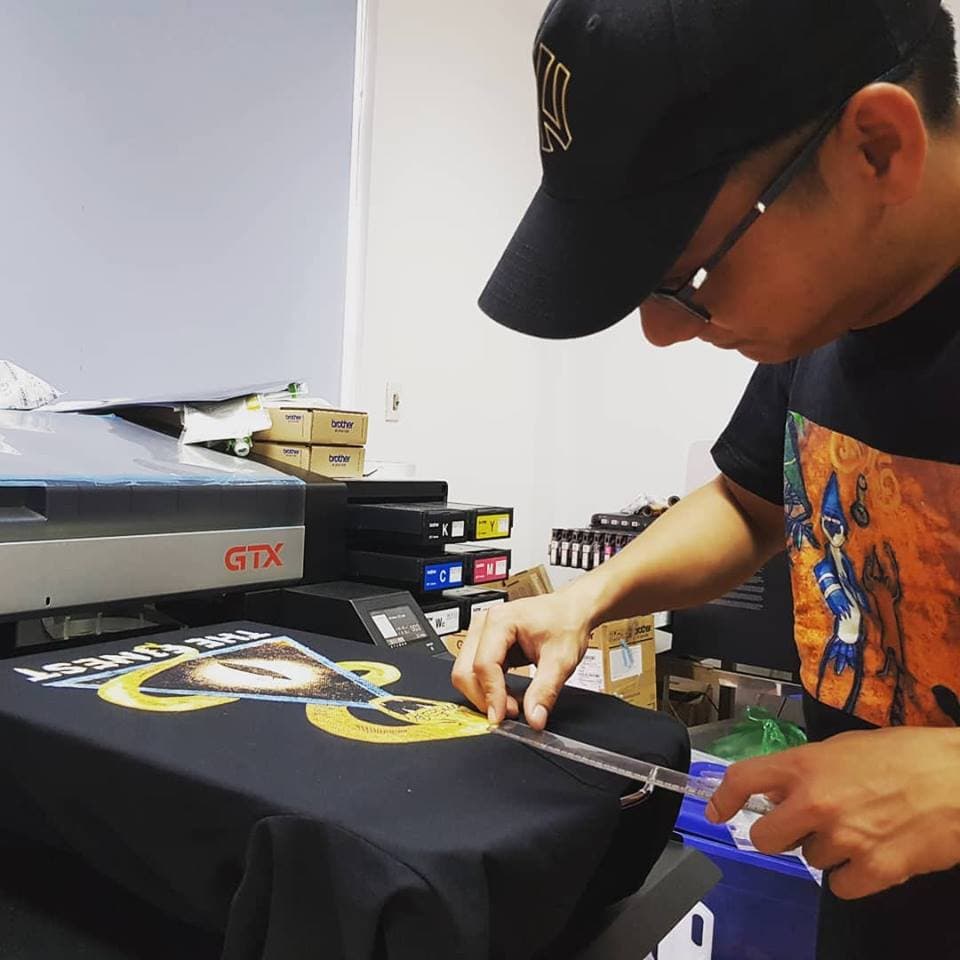
Startee has made custom printed apparel in Hanoi, Vietnam since March 2017. DTG orders are printed at a partner workshop in Startee’s network on a Brother GTX with Innobella ink; Startee handles artwork prep, the production spec and a check of every piece before delivery.
- Brother GTX printer — a dedicated DTG machine that prints directly onto fabric, with no intermediate film.
- Innobella ink certified to the OEKO-TEX® ECO PASSPORT standard — an international textile certification confirming the ink is free of substances harmful to skin, safe for children’s wear and garments worn close to the body.
- On dark cotton, Startee applies a white pre-treatment base layer before printing to get accurate color.
Beyond OEKO-TEX for the ink, Startee also follows CPSIA — the product-safety standard that applies to goods exported to the US market — so cotton shirts printed with DTG at Startee also suit orders that need product-safety documentation for export.
How to keep a DTG print looking sharp longer
Since DTG ink sets into the fabric fibers rather than sitting as a thick layer on top, the print holds up well when washed correctly: turn the garment inside out, avoid strong bleach directly on the printed area, and avoid high-heat drying — general care advice for any printed fabric, not unique to DTG, but especially important for keeping multi-color or photographic designs crisp.
Working with an English-speaking team
Startee’s site and support are bilingual, with an English-speaking hotline for international buyers and local brands — see custom t-shirt printing in Hanoi to get a quote.
No minimum order quantity
Since no screen needs to be made, DTG is cost-effective from a single piece — well suited to print-on-demand, personal gifts, a test sample before a bulk order, or a local brand that needs several different designs in the same production run without holding pattern inventory.
Best suited to which designs
- Photographs, portraits, artwork with fine detail — the kind of detail that gets lost when forced into a screen print’s limited color count.
- Smooth color gradients — continuous color transitions that screen printing can’t reproduce accurately, since each screen only lays down one solid color.
- Multi-color designs where you don’t want cost to scale with the number of colors, such as a multi-color logo, an illustration, or artwork based on a real photo.