
DTF (PET film) printing: how it works, pros and cons
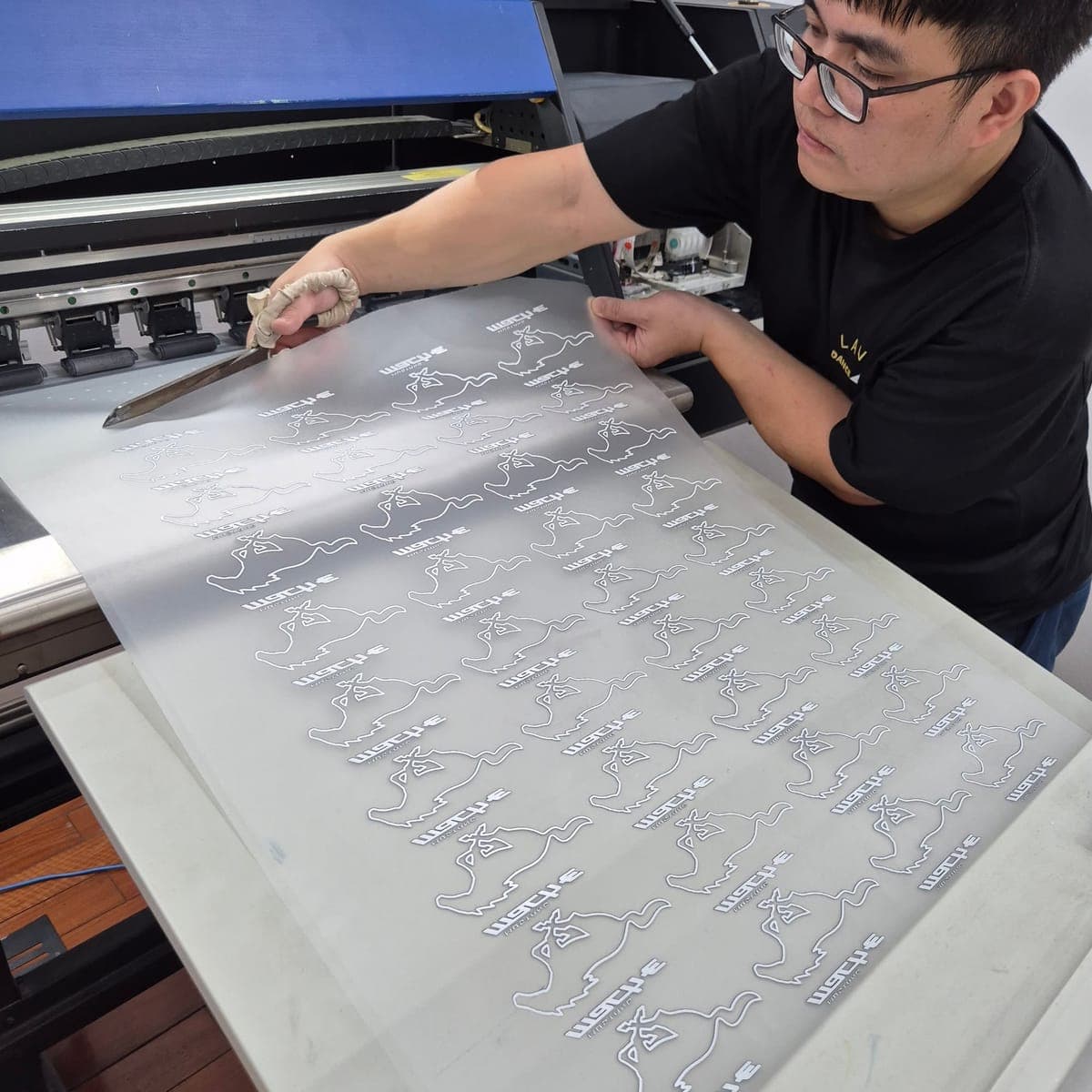
DTF (Direct to Film) prints a design onto an intermediate PET film layer, dusts it with adhesive powder, then heat-presses the printed film onto the fabric. Unlike DTG, which prints directly onto fabric, DTF creates a complete transfer layer first — allowing print-now, press-later production — and it works on a wider range of fabrics, including dark colors, without a separate pre-treatment step.
DTF delivers high resolution with sharp fine detail, including gradients and photographs.
What is PET printing? Is it the same as DTF?
In Vietnam many print shops call DTF PET printing (“in PET”), because the design is printed onto PET film before it is pressed onto the shirt. It is the same process: ink on PET film, adhesive powder, curing, then a heat press transfers the design from the film to the fabric and the film is peeled off. A quote for “PET printing” on T-shirts or football shirts is a DTF quote.
DTF (PET) vs sublimation
Both use a heat press, so they are often confused, but they work differently:
- Sublimation: the ink turns into gas and bonds into polyester fibers, leaving no layer on the surface. It only works on light-colored polyester and suits all-over sportswear. See sublimation printing.
- DTF (PET film): the design is a thin ink layer held on the fabric surface by adhesive. It works on cotton, polyester, blends and dark shirts, but you can feel the layer on large solid areas.
- All-over prints on light polyester jerseys: sublimation. Numbers, names or logos on dark or cotton shirts: DTF.
Startee prints DTF at its own workshop in Tan Xuan, Bac Tu Liem, Hanoi, from a single piece. For a full comparison see DTG vs DTF vs screen printing.
Why choose DTF
- Prints on many fabric types — cotton, polyester, blends, and some non-stretch materials that don’t suit DTG.
- Good color on dark fabric without a separate white pre-treatment step like DTG needs.
- Designs can be pre-printed onto film in batches and pressed on demand later — flexible for made-to-order production.
- High color fastness and adhesion after pressing, holding up to repeated washing when pressed at the right temperature and time.