
What is pique (cá sấu) fabric and when to use it
Pique — known in Vietnam as "cá sấu" fabric — is the go-to material for polo shirts, but not everyone ordering uniforms knows how it differs from plain jersey or when to choose it. This page explains what pique is, its pros and cons, the difference between 100% cotton and blended pique, and when it is — or isn’t — the right choice.
What is pique fabric
Pique is a knit fabric with a regular raised, waffle-like texture — unlike plain jersey (single jersey), which has a smooth, flat surface. That textured knit makes pique thicker, more structured and less prone to showing wrinkles than plain jersey, so it looks neat and smart — which is why it became the standard material for polo shirts. The Vietnamese name "cá sấu" (crocodile) refers to the fabric’s textured surface, not to crocodile leather.
Advantages of pique
- Holds its shape well through repeated washing — a polo doesn’t sag or lose form as fast as thin plain jersey.
- The raised texture gives a substantial, smart feel suited to office and corporate settings.
- Shows wrinkles less than plain jersey, so the shirt looks tidy all day.
- Breathable structure: the small gaps in the knit let air through better than some flat fabrics of the same weight.
100% cotton vs blended pique (CVC, TC)
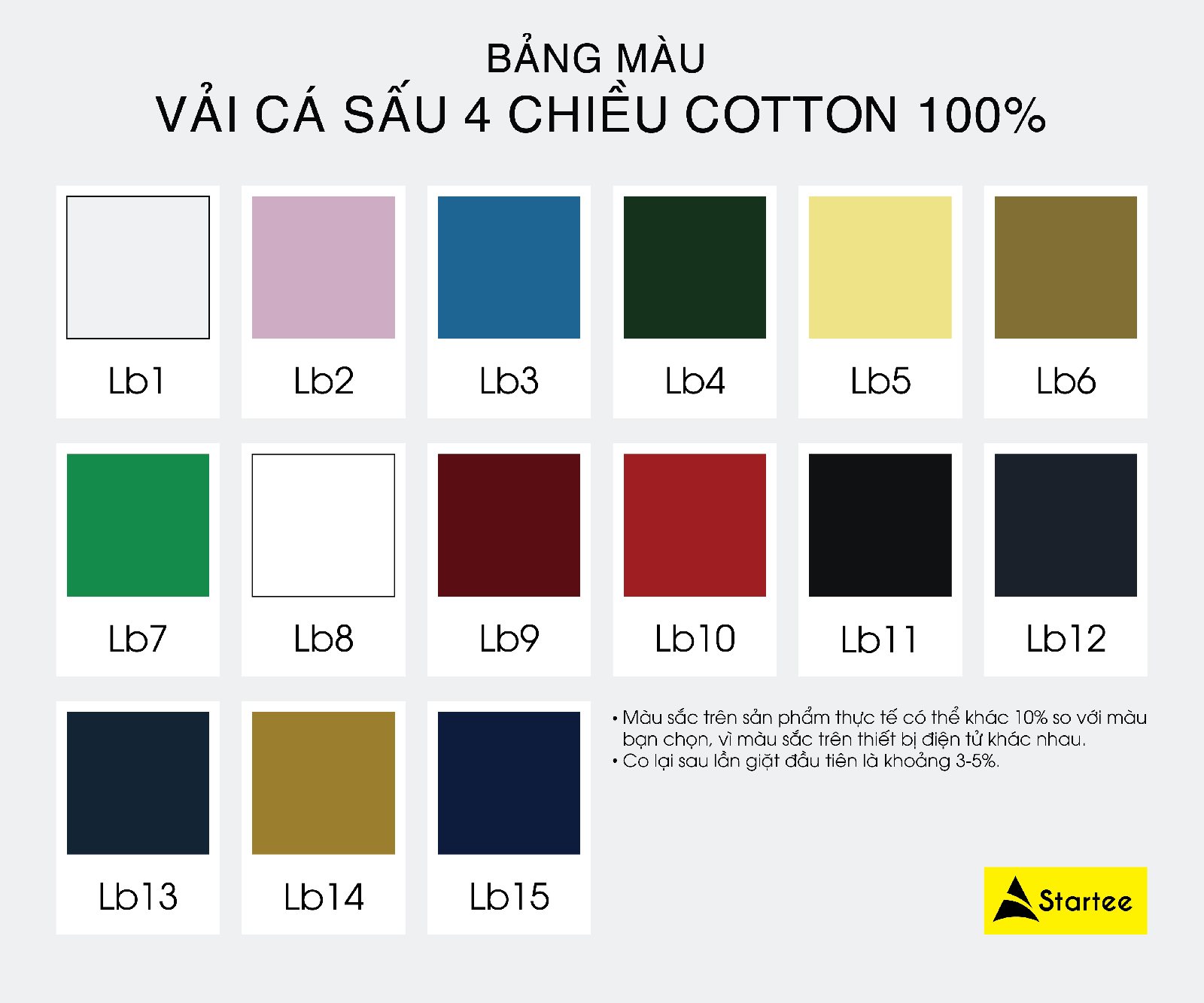
Pique comes in both 100% cotton and cotton blends. 100% cotton pique absorbs well, feels cool and prints accurately with DTG, but can shrink about 3–5% after the first wash and wrinkles more. CVC pique (higher cotton) balances softness with less wrinkling; TC pique (higher polyester) holds its shape, wrinkles less and costs less, but is less absorbent. Bulk uniform orders balancing comfort against budget often choose a blended pique for this reason. See 100% cotton vs. cotton blends and what fabric for company uniforms.
2-way vs 4-way stretch, and fabric weight
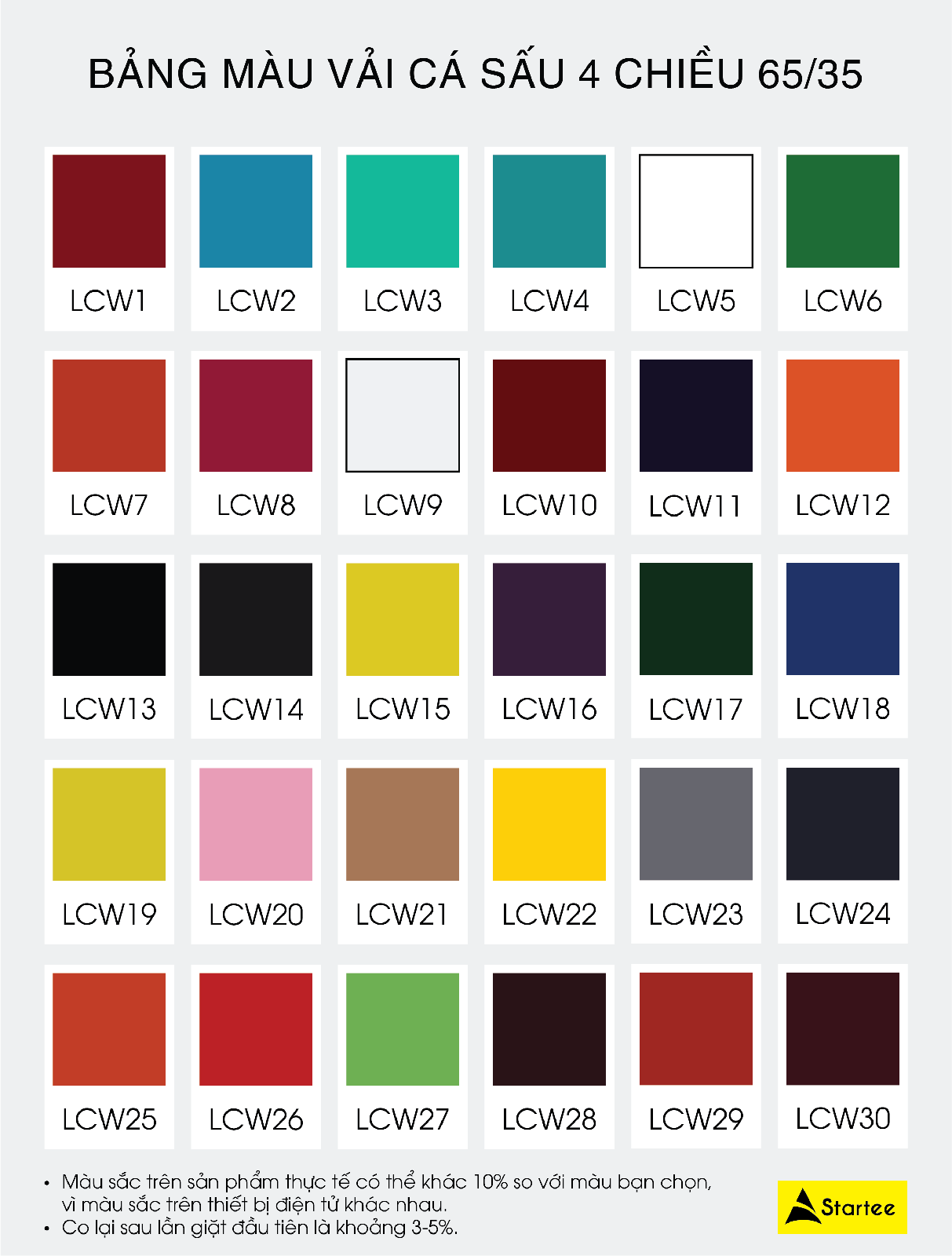
Pique also varies by stretch: 2-way pique stretches in one direction and costs less; 4-way pique stretches both ways for a more comfortable, better-fitting shirt, typically used for premium polos (both color charts above are 4-way pique). See the full comparison at 2-way vs. 4-way stretch fabric. Fabric weight (GSM) matters too — see the general principle at what is fabric weight (GSM). The exact weight for each pique sample (100% cotton and 65/35 blend) is advised directly based on your use case (air-conditioned office vs outdoor activity), since each sample can run at different weights.
When to use pique
- Office and corporate polo uniforms that need a neat, structured look.
- Uniforms worn often and washed frequently that still need to keep their shape.
- Event, conference or corporate-gift polos that want a more premium feel than plain jersey.
When not to use pique
- Active event or team-building t-shirts: plain cotton jersey is lighter, softer and more comfortable for movement.
- Sports uniforms that need to dry fast: choose cool-touch (poly) knit instead of pique.
- Designs with large all-over prints or detailed photos: pique’s textured surface isn’t as smooth as jersey, so very fine detail can look slightly less crisp.
Printing and embroidery on pique
On a pique polo, a company logo usually looks best and lasts longest with computerized embroidery — stitching raised on the textured surface feels premium and doesn’t fade like ink. Printing on pique is possible (DTG on cotton, or heat transfer/vinyl for small details), but for a small chest logo on a polo, embroidery is the standard choice.
Caring for pique garments
Wash inside-out, use cool water and avoid harsh wringing to protect the shape and textured surface. With 100% cotton pique, expect a slight shrink on the first wash as normal. Don’t use strong bleach on a printed or embroidered logo.